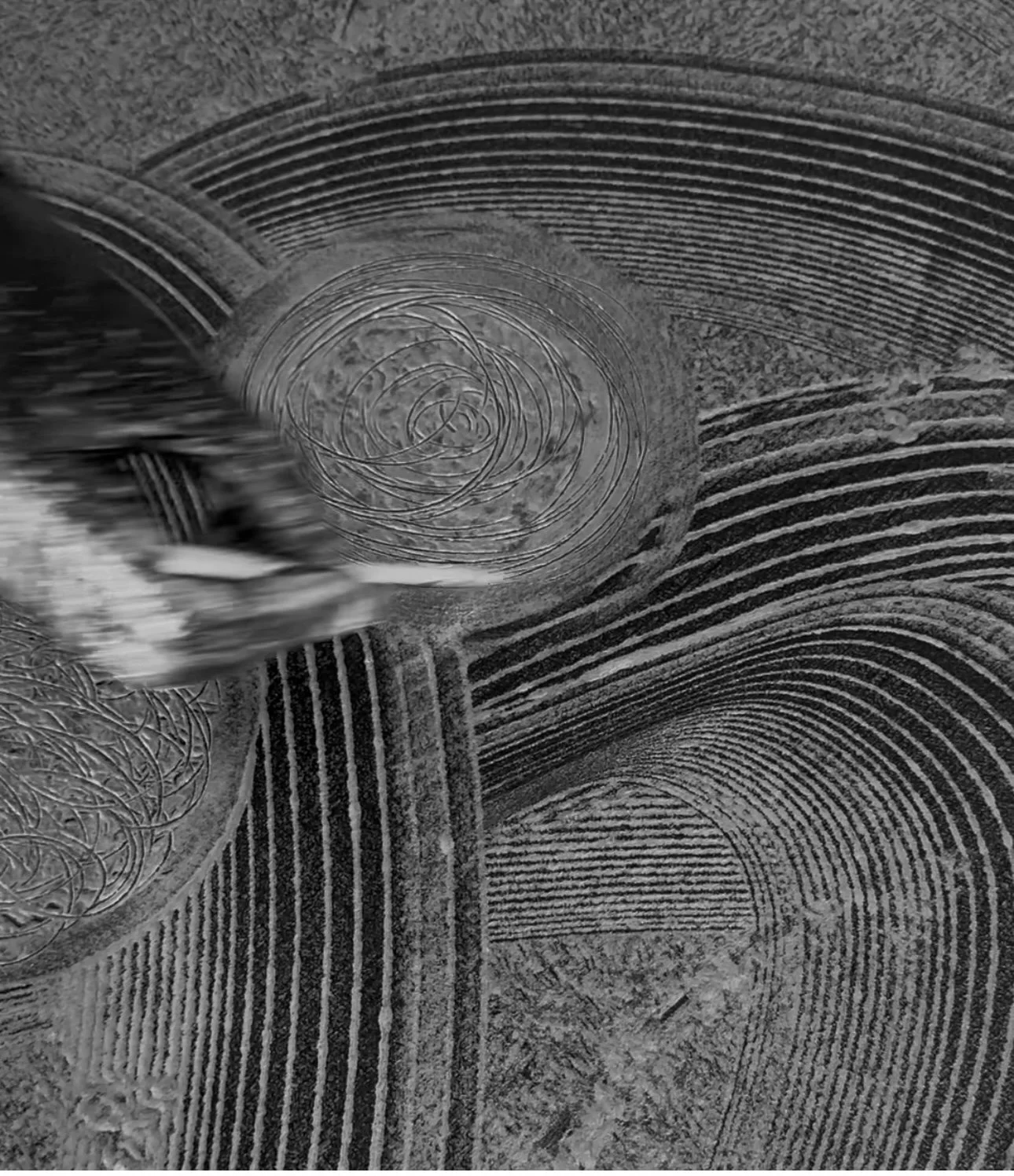
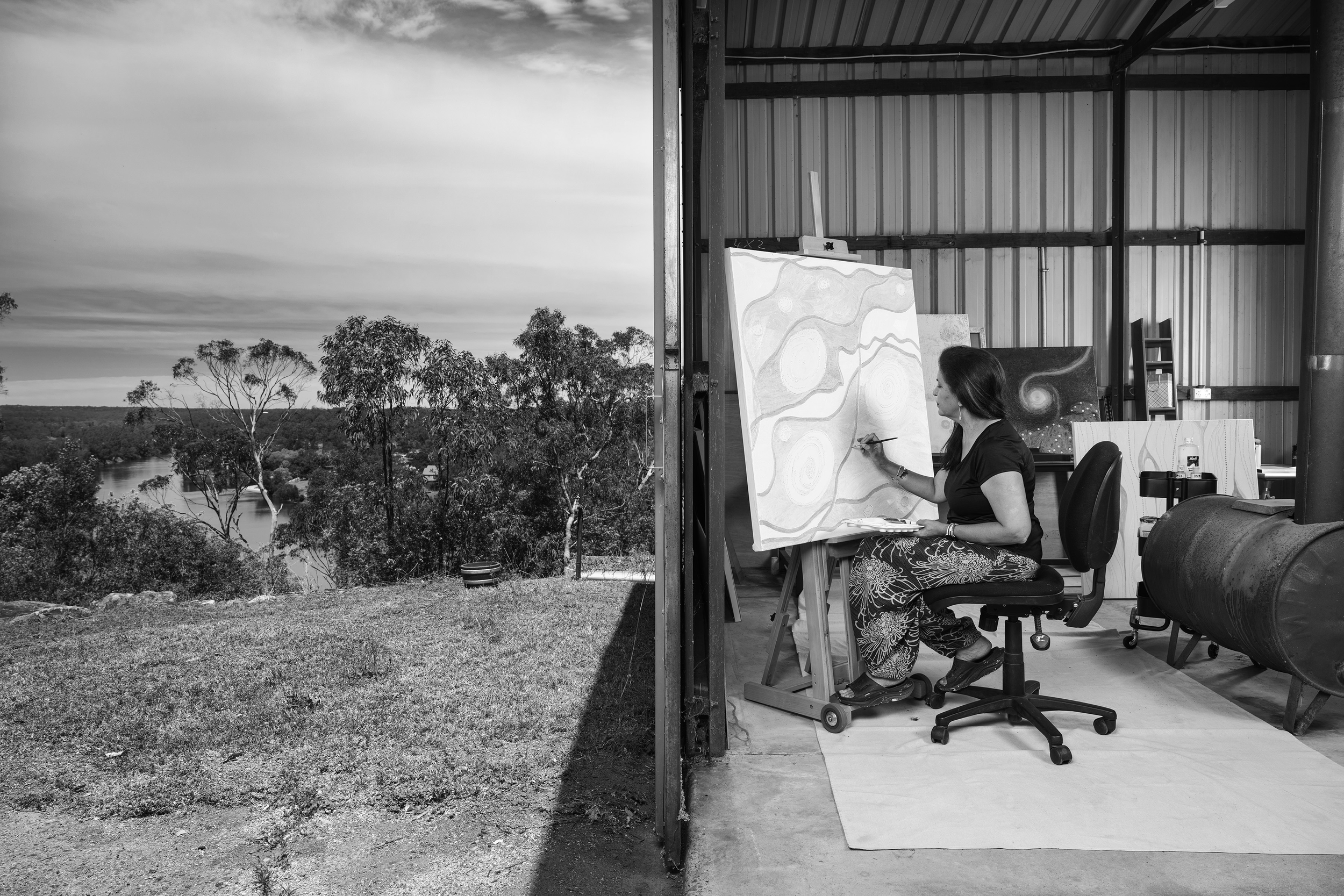
The Unfolding Continuum is the overarching framework of Neena’s art practice—an ever-evolving extension of abstraction, her work arises from a desire to move beyond declarative meaning toward the subtle logic of suggestion, evocation, and resonance. To articulate this vision, Neena has developed an aesthetic and conceptual framework called Dhvanic Abstraction. Rooted in the ancient Indian aesthetic principle of dhvani—the art of suggestion— extending this idea into a visual and spatial practice that engages abstraction, architecture, and cross-cultural philosophy.
Unlike the classical dhvani of literary poetics, her Dhvanic Abstraction is a contemporary, intuitive language where meaning arises not from representation, but through the atmospheric, the layered, and the suggestive.
Concepts of rasa (essence) and dhvani guide how she layers perception, while the Japanese idea of ma, the pause, allows silence and interval to speak. Each painting is meant as a space for dialogue — with itself and with the viewer — where resonance is experienced rather than explained.
Key to this language is porosity, a concept drawn from her architectural background. Neena reframes porosity not only as a spatial condition but as a metaphysical openness—an invitation for viewers to enter reciprocal dialogue with the artwork. The painting becomes a threshold, where the viewer and the image co-create meaning through presence, introspection and intuitive sensing
In her work she investigates universal themes such as creation, feminine agency, ecological interconnectedness, and inner awakening. Using symbolic geometries, elemental materials, and a restrained monochromatic palette, she creates spaces where the visible and invisible meet. Informed by cross-cultural philosophies, scientific cosmology, and feminist thought, her works reimagine abstraction as a site of connection.
The Unfolding Continuum is not a singular vision, but a constellation of inquiries—into what it means to create, to belong, to transform.
“Time dissolves while I paint. The work unfolds itself through process, intuition, accident, and reflection. I do not measure completion technically but how well it resonates with me — when the work speaks back and its resonance is alive. Even then, it remains incomplete until it enters dialogue with the viewer, whose memory, perception, and presence complete the continuum.”
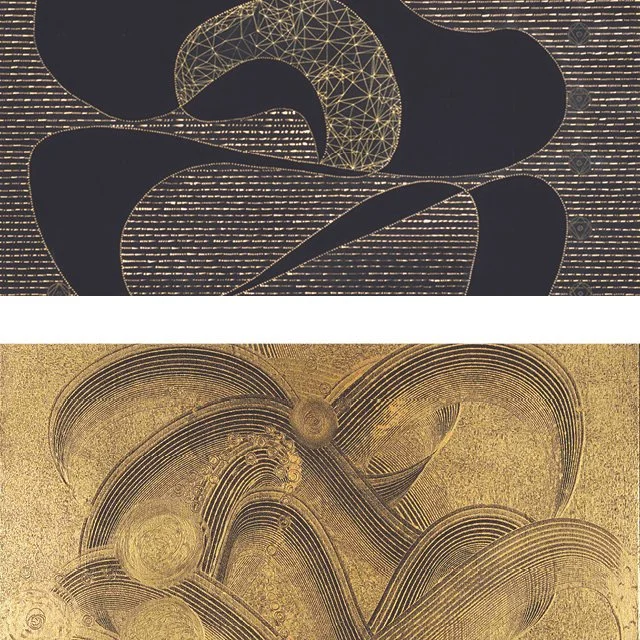
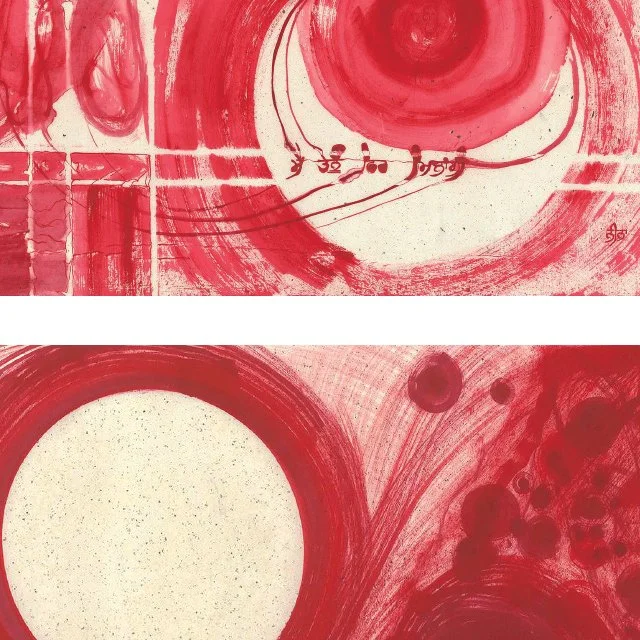
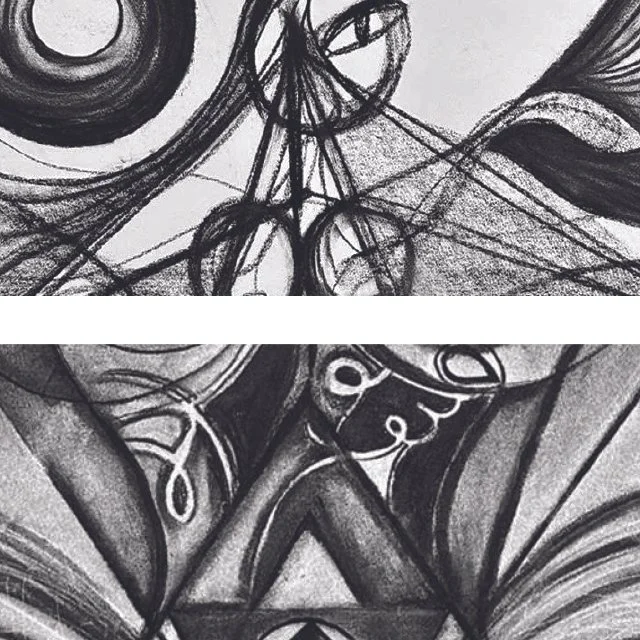
Exploring the Philosophy and Process Behind Neena’s Art
Interview January 2025 with Gallery Nava Rasa
gNA – What is your art process
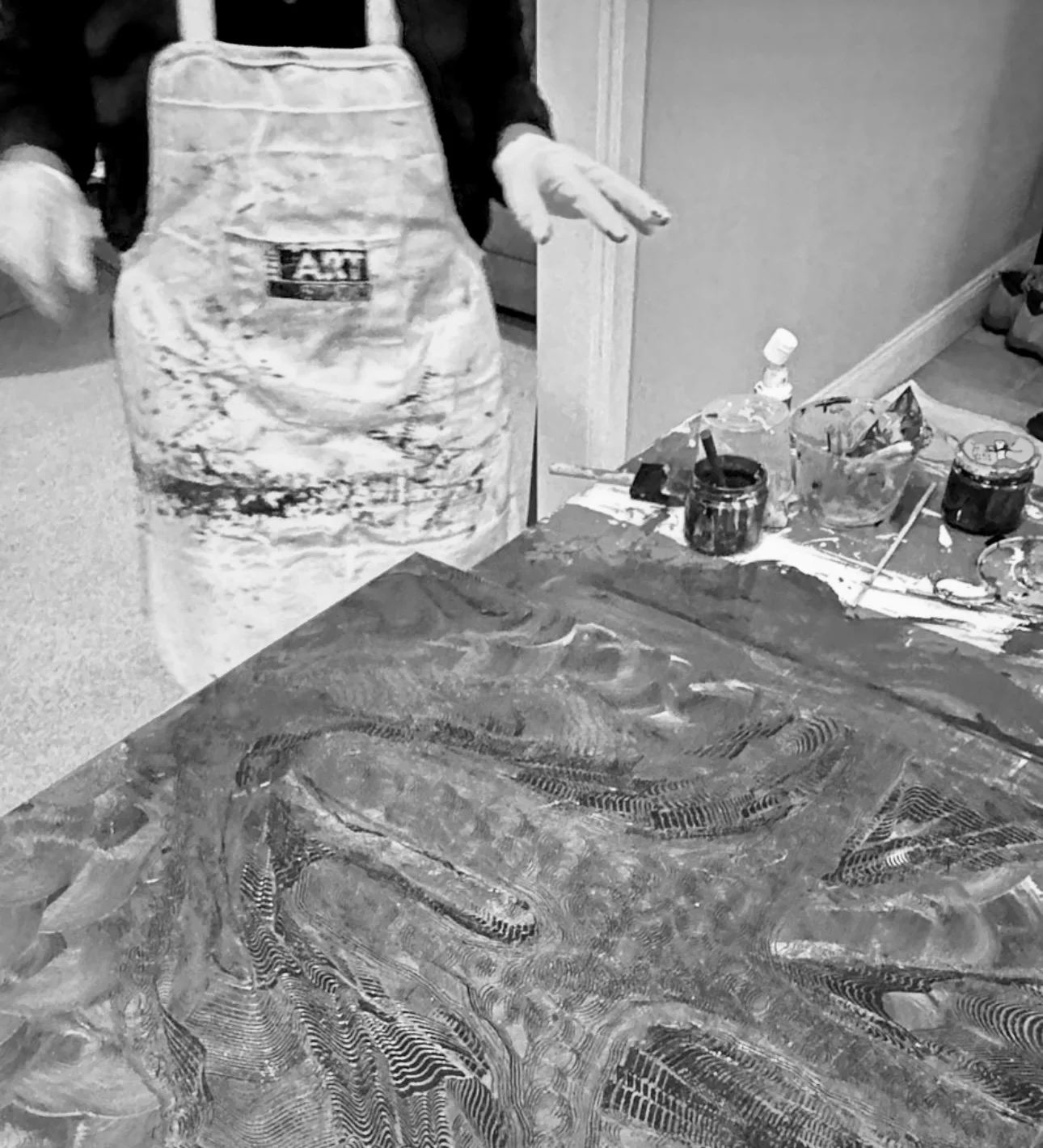
Neena: My art process begins long before the brush touches the canvas. It comes from intuition, reflection, and years of thinking about creation — what it means to create, what it means to exist, and how ideas emerge.
When I begin a painting, I’m already holding layers of culture, philosophy, and lived experience. From there, the process unfolds. Some of it is accidental, and some of it is serendipitous — or what I call gur parsad (in the Punjabi language). Literally, gur means the dispelling of darkness, and prasad means a gift. So gur parsad is “a gift that dispels darkness” — an answer you didn’t have.
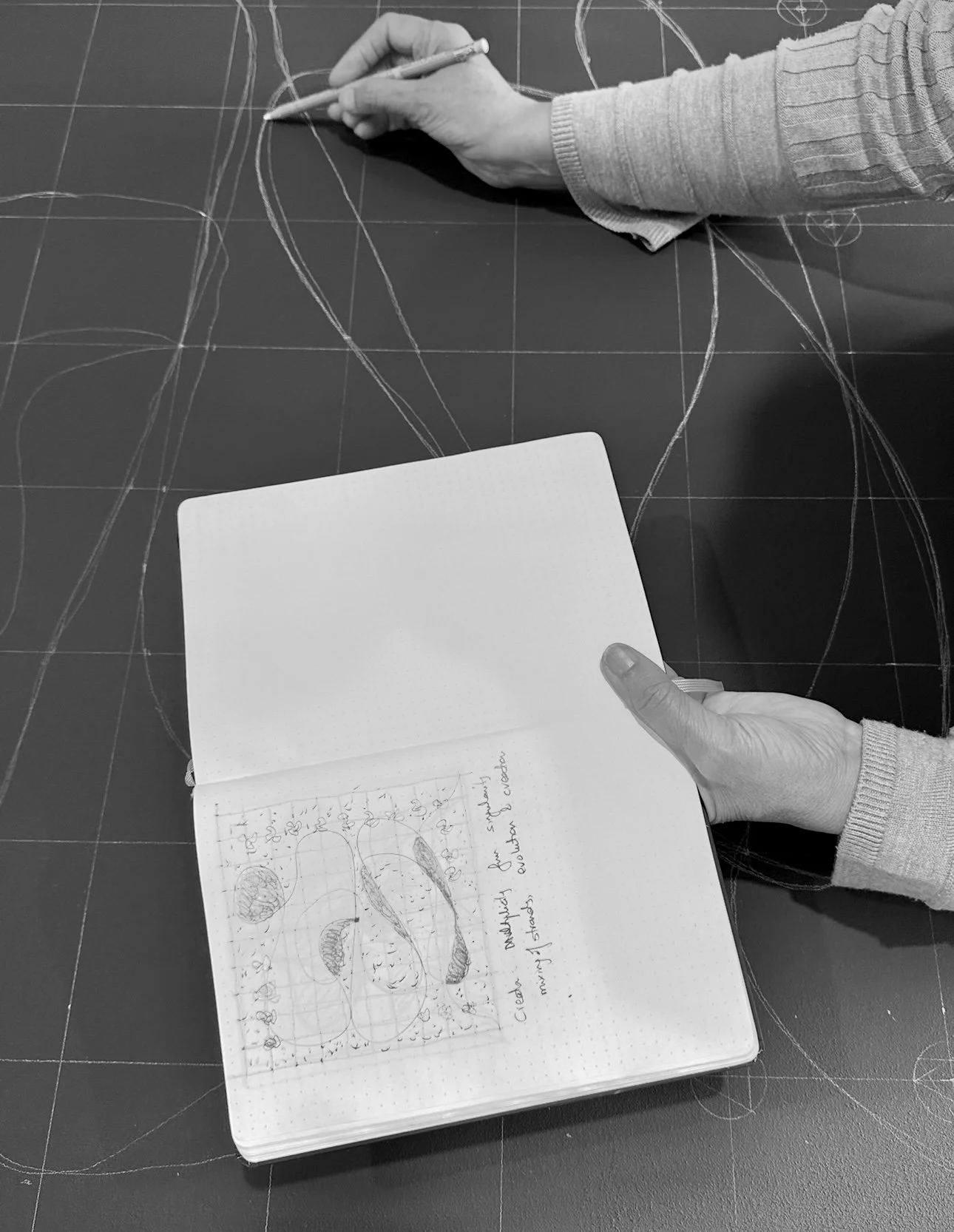
When I start a painting, I often don’t know what it will become. I begin with a vague notion, sometimes a sketch and something emerges. This is its own form of gur parsad because the process illuminates something previously unknown — a spark of insight. Someone once mentioned “It doesn’t look like it has come from you.” Something emerges that feels like a gift — as if the painting is telling me its own truth.
Insights in painting are momentary, like sparks. A painting is a spark, not the full light. For a moment it gives me an answer, and then it passes. Music helps me enter that state of flow. Spiritual music (shabads) or instrumental music allow everything else to fade, and only the painting remains, the memory of these sound vibrations have stayed with me since childhood.
While painting, my mind makes connections. My base layer is my culture, but associations happen intuitively. Intuition draws on experience, reading, and research. Research focuses the mind, but painting allows connections across multiple layers. Often, I don’t know how something emerges — it simply reveals itself.
I don’t want to express things superficially. Joyful expression is fine, but it doesn’t satisfy me. I seek depth because I seek answers.
gNA: How do you start a series, and how do you know when the work is complete?
Neena: It begins with a question I want to answer — something fundamental about existence. The Creator–Creation series started from that: Where do we come from? Where do we go? What is the meaning of all this? Even if existence is accidental, the question remains.
My underlying philosophy comes from my family, teachers, and the principles of Sikhism. Fundamentally, Sikhi teaches; live honestly, work hard, and reflect on Naam. For me, Naam now means gratitude — gratitude for life, the universe, everything. Gratitude underpins the continuum of creation.
Creation is both giving and taking, extracting and returning value. Rituals, prayers, and thanksgiving reflect this continuum. Japji Sahib (Steps to the divine) guides ethical living: becoming God-like through kindness, reflection, and ethical action. But the world is not peaceful. Miri–Piri (Temporal-Spiritual) — living in peace while standing against injustice — reflects the pragmatic reality of existence. These principles inform the philosophy behind the Creator–Creation series.
Art is often described as a dialogue — between the artist and the medium, between intention and accident, between the seen and the unseen. In the Creator–Creation Continuum series, Neena explores this dialogue in its most elemental form: the interplay of existence, essence, and emergence. Each painting is both a question and an answer, a spark illuminating the unknown.
Drawing on intuition, philosophy, and a lifetime of reflection, Neena atMA approaches creation as a continuum rather than a fixed outcome. She situates herself within layers of culture, experience, and study, yet allows serendipity to guide what emerges. Her work is informed by fundamental human questions: Where do we come from? Where do we go? What is the meaning of creation?
Interviewed by gallery Nava Rasa (gNA) Neena traces her approach to these questions, from the philosophical foundations of her practice to the subtle interplay of rasa, dhvani, and the pause — the aesthetic vibrations that give life to abstraction. It invites the reader to step into the continuum, to witness creation as a living, breathing dialogue.
Neena reflects on the making of her work, the flow of intuition, and the delicate balance between intention and emergence — a meditation on what it means to create, and what it means to encounter creation.
gNA: Once a series begins, how do you develop each piece?
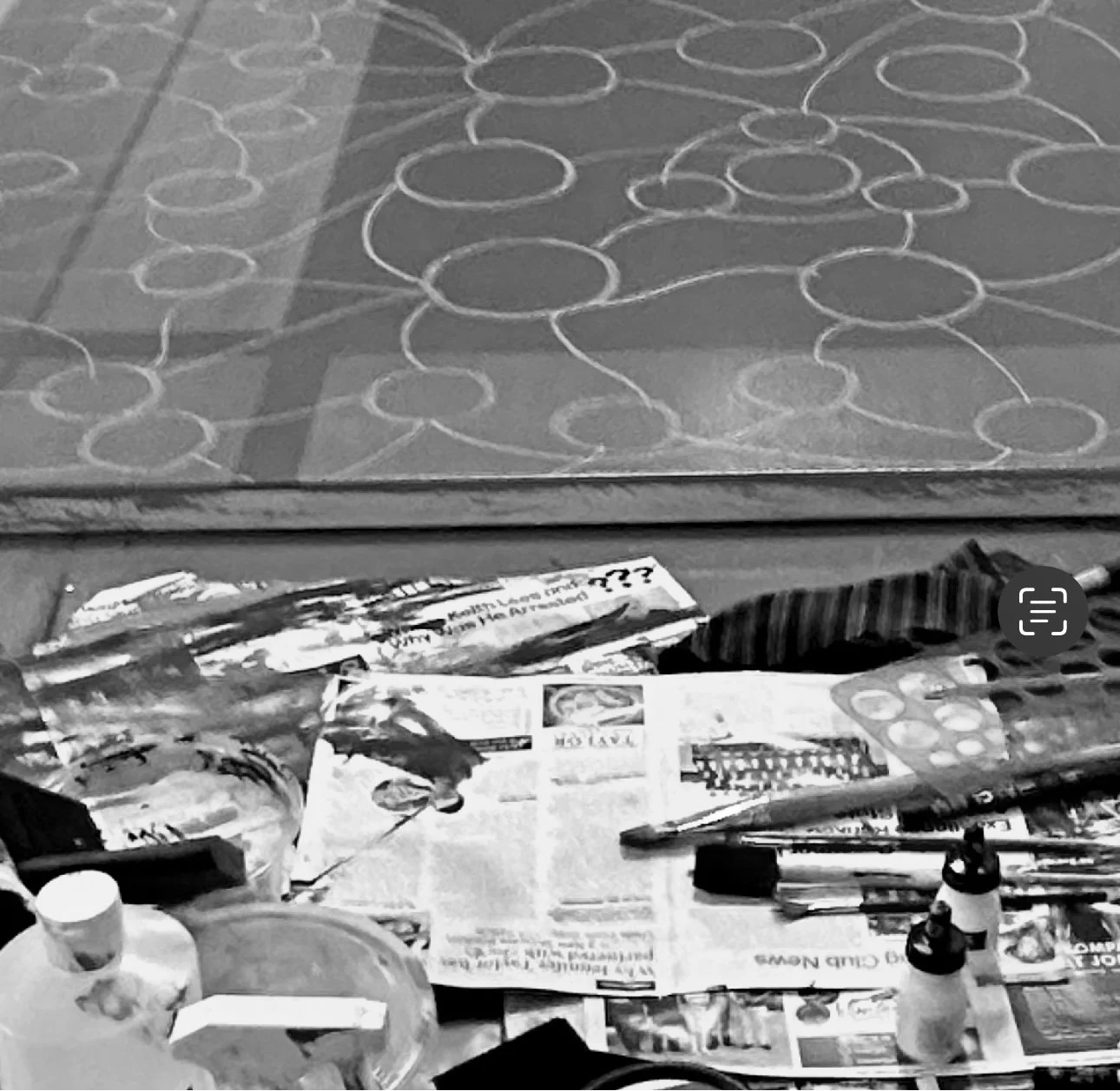
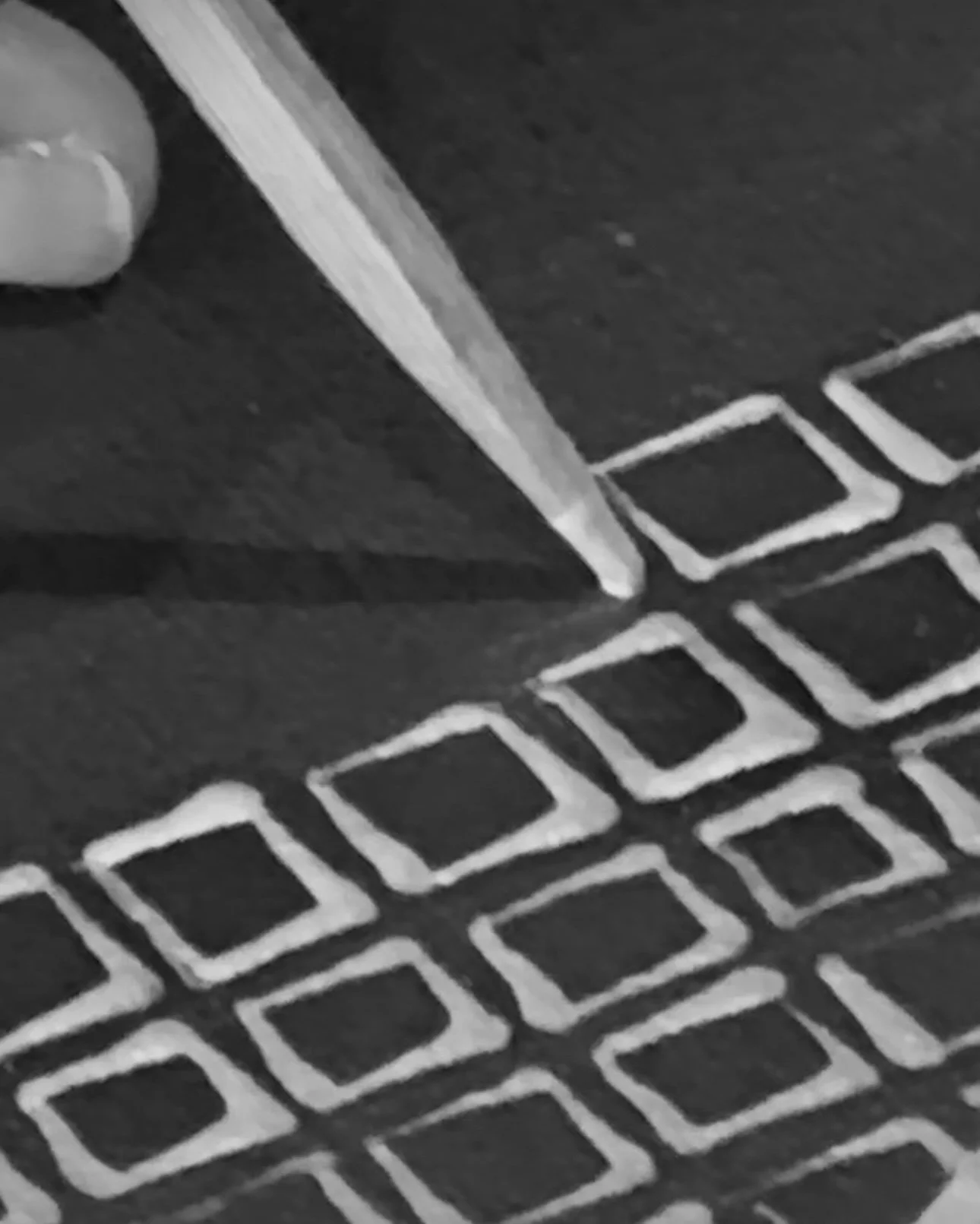
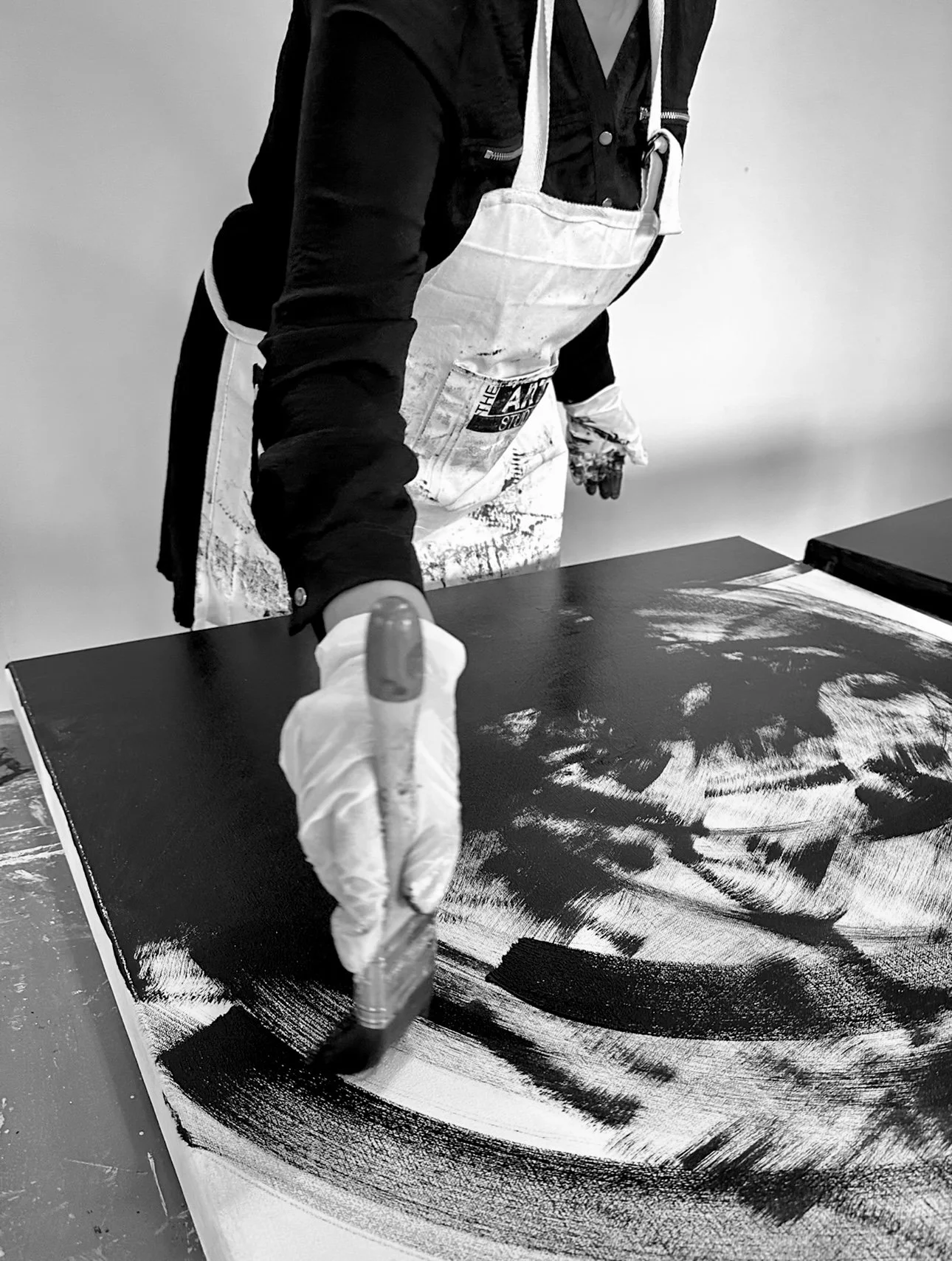
Neena: I begin with a vague idea — a feeling I want to explore. To develop it, I research the concept and think about how to communicate complex ideas visually. You cannot express everything, but you can convey the essential core and then layer meaning. Some elements are clear in my mind; others emerge through serendipity.
Two aspects guide the work: the thinking behind the piece and its visual language. Composition is part of that language. I start with a composition that feels right, but it often evolves as the work progresses.
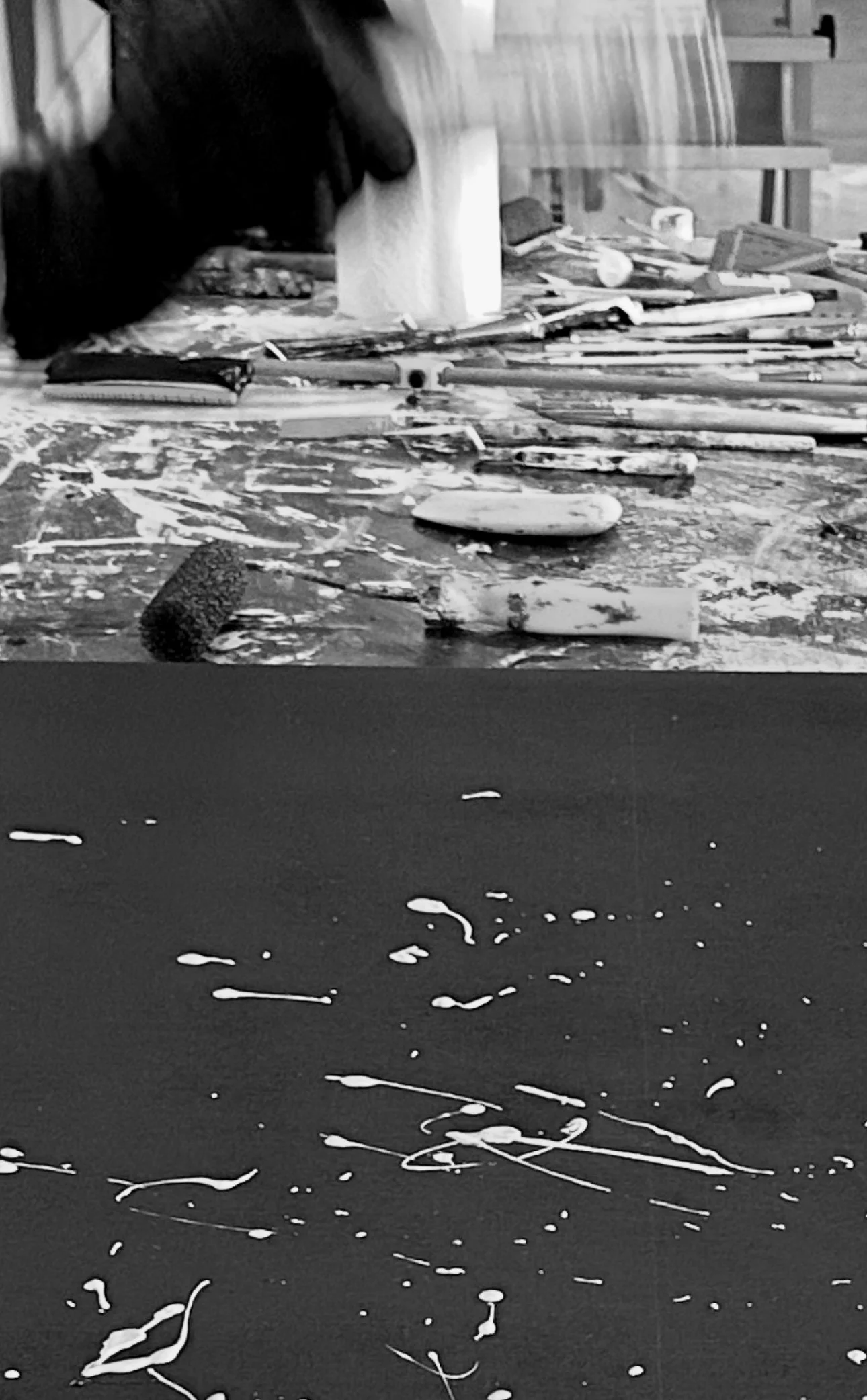
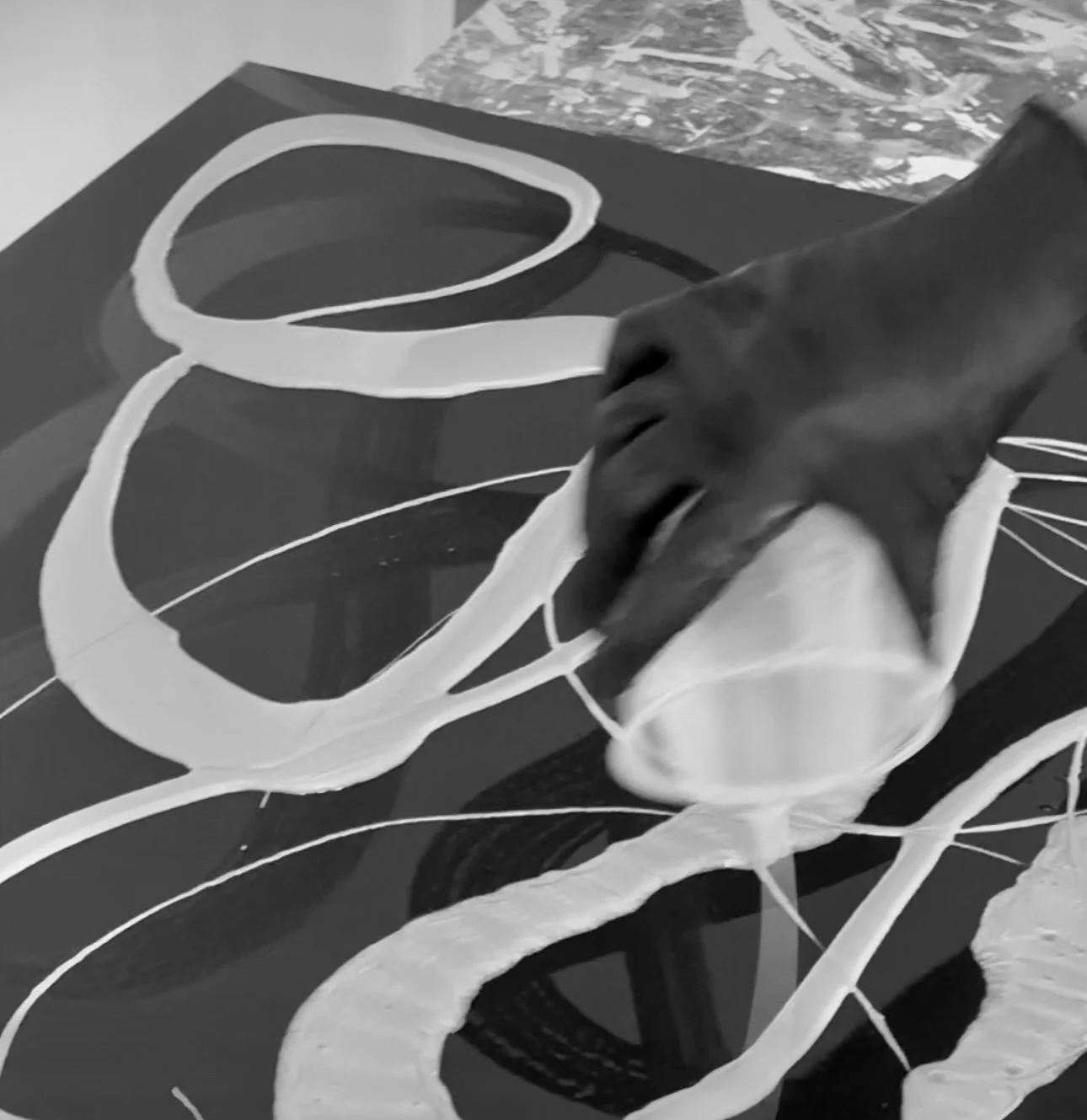
The medium shapes the language too. Acrylics, ink, brushes — each expresses differently. Experimentation teaches what works. I don’t worry about perfection. An imperfect piece can be perfect in its own way. Once the work conveys what it needs to, it is complete.
Sometimes decisions are intuitive. A simpler layer might replace a complex one if it communicates better. Other times, accidents guide the piece to a stronger outcome. That happens in every painting.
Rational thinking is important — in science, in architecture — but even scientists arrive at insights intuitively: through dreams, play, or sudden leaps. My process is similar. The real connections happen non-linearly.
Ultimately, the journey itself is joyful. Painting gives me answers. I work for myself, but the ultimate judge is the viewer. If the painting moves me after completion, I consider it successful.
gNA: Could you explain Rasa and Dhvani in the context of your work?
Neena: Rasa is essence — the core feeling I want to convey. I focus on essence rather than classification.
Dhvani is suggestion — meaning conveyed indirectly, not literally. It is vibration or frequency, something felt rather than seen. The Japanese concept of Ma, the pause or interval, parallels this. Meaning exists in silence, in the space between forms.
For me, dhvani is what I try to evoke — a subtle resonance that interacts with the viewer. Rasa and dhvani together create a dialogue: the essence is suggested, not fully stated, reflecting the unfolding continuum of creation itself.
gNA: Some describe this as a trinity of Rasa, Ma, and Dhvani. Do you agree?
Neena: I see it not as a trinity but as a complex web of ideas. These concepts are central, but they connect with other layers — base layers, if you like. You add, remove, edit; it is about connections. In scientific terms, you could relate it to space and time.
Even in painting, there is a sense of time. The eye moves through a composition, guided subtly — like movement in Ikebana. How do you create movement in stillness? Abstraction allows that. Kandinsky explored similar ideas: movement through lines, points, and planes.
Painting, like architecture, is composed of lines, points, and planes. The best works “show” rather than describe. That is what I aim for in the Creator–Creation series.
gNA: And interpretation versus self-reflection?
Neena: Interpretation is receiving a source — a shabad, a pauri (step), an emotion — and understanding it through your lens. Self-reflection asks: Am I conveying it? How?
Interpretation is momentary; self-reflection is ongoing. When I worked on the Japji Sahib series, I read extensively and listened to commentaries. But when I sat to draw, whatever emerged, emerged. That is the mystery of the process. Sometimes the work changes while I create — and that is part of the continuum.
Stopping interrupts the flow. When I paint, I don’t judge. I trust the process, and the work becomes part of the continuum I am exploring.
gNA: Thank you, Neena, for sharing these insights.
Neena: It’s a pleasure. In the end, painting is about exploration — a dialogue between the unknown and the revealed, between intuition and reflection, between creator and creation. Each piece is both a question and an answer, a spark in the ongoing continuum.